Advertising the 1950s.jpg

Sep 1.jpg

The drawings commissioned by Martins for use in our advertising in the 1940s proved to be popular, and our regular monthly and seasonal advertisement slots in a number of publications have featured these outstanding artworks over many years.  The archive has a large number of 1950s advertisements which will be laid out below in order of year of publication, and beginning with more commissioned artworks…

Sep 1.jpg

1950 – Various Artists

Sep 1.jpg

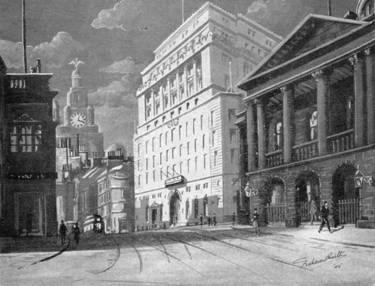
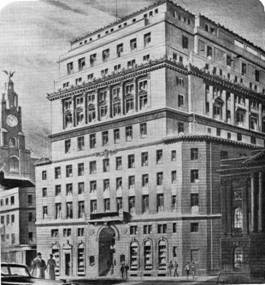
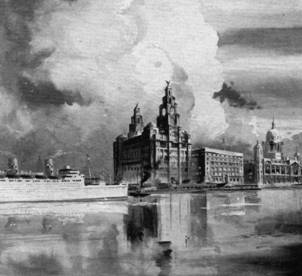
We have seven examples from 1950 of drawings commissioned by Martins for use in its advertising.  This includes three different impressions of our Head Office Building at 4 Water St Liverpool.

Sep 1.jpg

1950 Head Office Building by Graham Smith MBM-Au50P38.jpg

1950 Head Office Building by H A Crosby MBM-Au50P38.jpg

4 Water Street by Graham Smith

4 Water Street by H A Crobsy

Sep 1.jpg

1950 Head Office Building by J C Armstrong MBM-Au50P40.jpg

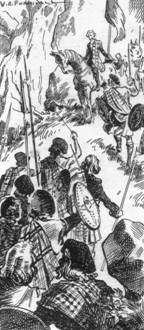
1950 The 1745 Rebellion by Victor R Furnivall MBM-Au50P40.jpg

1950 Symbolising the link between Canada and England by H A Crosby MBM-Au50P39.jpg

Above: Symbolising the link between Canada and England by H A Crosby


Left: 4 Water St by J C Armstrong

Centre: 1745 Rebellion by Victor Furnivall

Sep 1.jpg

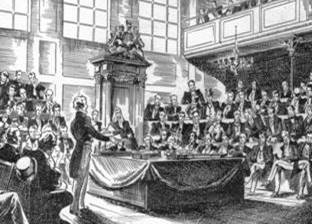
1950 Peel addressing the House of Commons by Victor R Furnivall MBM-Au50P39.jpg

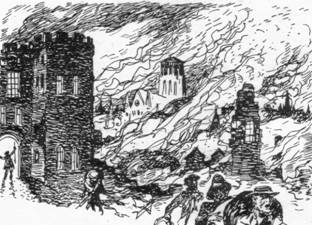
1950 The Great Fire of London by James E McConnell MBM-Au50P40.jpg

Peel addresses the House of Commons

by Victor Furnivall

The Great Fire of London

by James E McConnell

Images: Martins Bank Archive

© Artists as named 1950

Sep 1.jpg

1951 – The Stately Homes of England

Sep 1.jpg

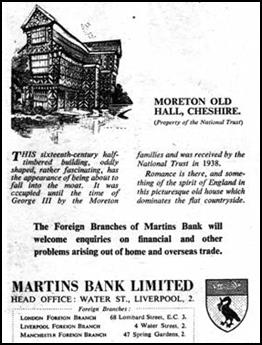
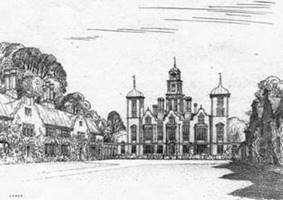
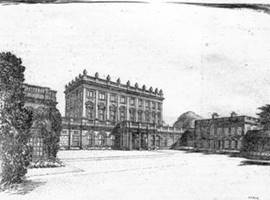
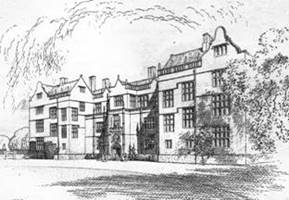
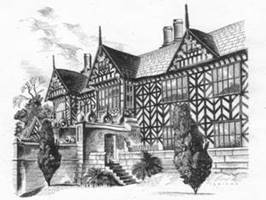
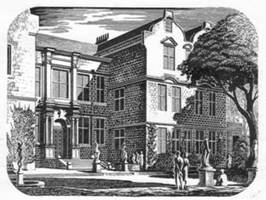
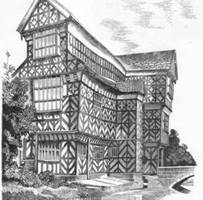
1951 01 MBM.jpgFor our 1951 series of advertisements we have chosen the theme of England's stately homes. In many ways they epitomise all that is best in our English way of life:—breeding, tradition, dignity and service to the community, and so they form a suitable medium of linking up our own message to the public.   The set lends itself to pictorial illustration of high quality and the idea has the advantage of topicality following the publication last year of the report of the Commission appointed to investigate the problems facing the owners of these places as regards maintenance and preservation. Three artists were chosen to execute the drawings, G. H. Wedgwood, J. C. Armitage and F. G. Lodge. Our readers are already familiar with the work of Geoffrey Wedgwood and Josh Armitage (‘Ionicus’). F. Graham Lodge, however, is a newcomer to bank advertising. He is a black and white artist and his work has appeared in a large number of publications, including the Radio Times.

1955 Moreton Old Hall ad from Punch PA.jpg


Image: Martins Bank Archive

Sep 1.jpg

He was artist to ‘Everyman’ from 1929 to 1931 and to the " Observer " from 1929 to 1934. Samples of his work have been acquired by the Belfast Art Gallery, the Bank of Scotland, the Athenaeum Club, H.R.H. the Princess Royal, Colonel Lord Wigram and others. He has exhibited at the Royal Academy. Born in 1908, he was educated at King's School, Grantham and University College, London, also at London University. He served throughout the second World War, being invalided out of the Forces in 1945 and has since taught in London schools. His hobby is gardening.

Sep 1.jpg

1951 Blickling Halll MBM-Sp51P32.jpg

1951 Cliveden Buckinghamshire MBM-Sp51P30.jpg

Blickling Hall Norfolk

Cliveden Buckinghamshire

1951 Montacute House Somerset MBM-SP51P33.jpg

1951 Speke Hall MBM-Sp51P32.jpg

Montacute House Somerset

Speke Hall near Liverpool

1951 The Treasurer's House York MBM-SP51P33.jpg

1951 Moreton Old Hall Cheshire MBM-Sp51P31.jpg

York The Treasurer’s House

Moreton old Hall Cheshire

Images: Martins Bank Archive

© Artists as named 1951

Sep 1.jpg

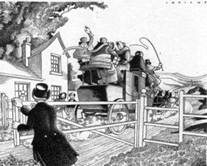
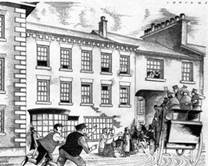
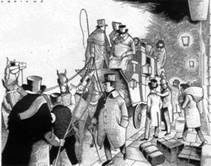
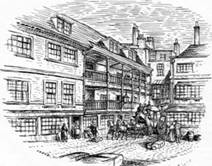
1952 – The Stagecoach Era

Sep 1.jpg


1950s London to Liverpool Mail Coach ad from Punch PA.jpg

Image: Martins Bank Archive

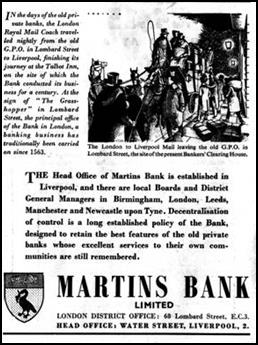
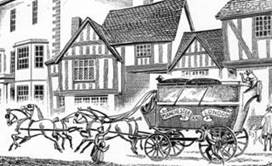
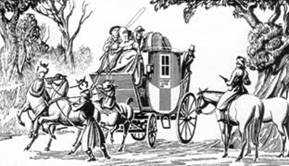
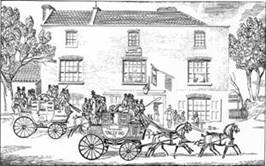
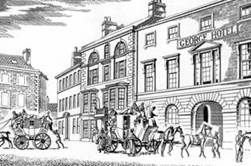
1952 02 MBM.jpgThe decline of the old private or ‘country’ banker and the growth of joint stock banking was part of the process of modernisation of life in these islands, modernisation in which the improvement of communications played a very large part. The stage coach era has always been considered romantic and picturesque, thanks partly to Charles Dickens and in more recent times to Baroness Orczy. Picturesque it certainly was, but we cannot concede the romance. To travel in or on a stage coach was a most unpleasant experience and a test of endurance which was only undertaken of necessity. There was the ever-present danger of footpads and highwaymen, overturning due to bad roads, breakdowns and indifferent inns. There is even one incident on record of the horses drawing the Exeter Mail being attacked by a lioness which had escaped from a nearby menagerie.

Sep 1.jpg

Stage coaches are said to have begun about 1640 and the very last coaches were probably those in use in Lakeland as late as 1914. As regards crime on the roads, the year 1893 seems to have been remarkable for a spate of road robberies and in that year the Bristol Mail was robbed of a bank parcel valued at upwards of £1,000. In 1822 the Ipswich Mail was robbed of notes to the value of nearly £32,000.  No more eloquent comment on the state of the roads can be found than is contained in Blew's book " Brighton and its Coaches." He says:—" The Sussex roads seem to have gained an unenviable notoriety for badness from a very early period. When the Emperor Charles VI came to England to visit the Duke of Somerset in 1703, his coach capsized a dozen times before he reached Petworth." If the roads treated the coach of an Emperor like that, what hope was there for the ordinary traveller?


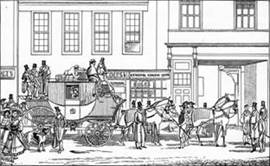
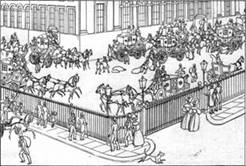
Because of the connection with the rise of banking as we know it today the Stage Coach period has been chosen as the theme for this year's series of advertisements. Seven of the drawings have been done by our old friend Geoffrey H. Wedgwood, four by the inimitable Ionicus (J. C. Armitage) and one by F. Graham Lodge. The careers of each of these artists have been outlined in previous issues of the Magazine. Two or three of the Wedgwood drawings are the artist's simplification of well-known colour prints of stage coaches, a simplification which was essential because of the exigencies of reproducing the drawings on a very small scale. It has been left to Ionicus to give the touch of humour which adds so much to the attraction of the drawings and to the appeal of the series. Although many of the old coaching inns are picturesque as to their interiors the artists found that some of the subjects we had to choose were not, of them­selves particularly attractive and one or two of the inns were not now in existence. It was a matter of satisfaction that we were able to find a positive connection with our own bank, which we were able to introduce into two of the advertisements.

Sep 1.jpg

1952 Blenheim Coach Leaves Star Hotel Oxford MBM-Su52P18.jpg

1952 North East View of GPO London Circa 1840 MBM-Au52P19.jpg

The Blenheim Coach leaves the Star Hotel at Oxford

North East view of the GPO London ca.1840

1952 Brighton Coach at Toll Gate MBM-Su52P18.jpg

1952 Coach at Bull and Mouth Inn Leeds MBM-Su52P19.jpg

Brighton Coach at Toll Gate

Coach at Bull and Mouth Inn Leeds

1952 London to Liverpool Mail Coach MBM-Su52P17.jpg

1952 The George Inn Southwark MBM-Su52P19.jpg

London to Liverpool Mail Coach

The George Inn Southwark

1952 Pickfords Manchester and London Fly Van 1826 MBM-Au52P21.jpg

1952 Stand and Deliver MBM-Au52P21.jpg

Pickfords Manchester and London Fly Van 1826

“Stand and Deliver!”

1952 The Birmingham Tally Ho Coaches MBM-Su52P17.jpg

1952 The George Inn PenrithMBM-Au52P20.jpg

The Birmingham Tally Ho Coaches

The George Inn Penrith

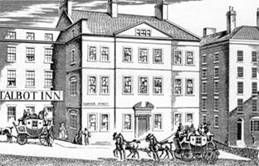
1952 The Golden Talbot inn Liverpool MBM-Au52P19.jpg

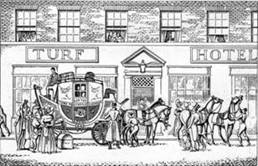
1952 The Newcastle Flying Coach outside Turf Hotel MBM-Au52P20.jpg

The Golden Talbot Inn Liverpool

The Newcaslte Flying Coach outside Turf Hotel

Images: Martins Bank Archive

© Artists as Named

Sep 1.jpg

Other 1950s Campaigns

Sep 1.jpg

The genteel and subtle nature of the advertising we have so far seen is about to give way to a more targeted affair – from those who play golf, to those who drive lorries or bake bread, the Bank is about to tailor its advertising in order to demonstrate that YOU are worthy of being a customer and Martins is the natural choice for you…

Sep 1.jpg

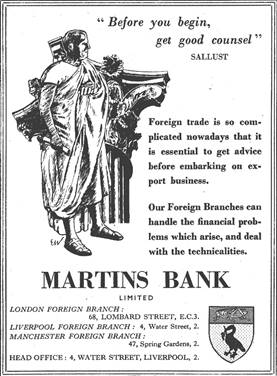
1950 Before you begin get good counsel PA.jpg

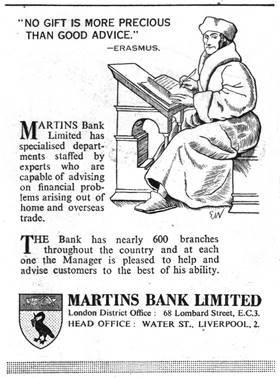
1950 No gift more precious than good advice PA.jpg

Sep 1.jpg

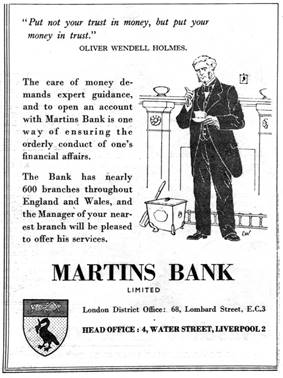
How about a spot of philosophy to guide you to the doors of the right bank?

Sep 1.jpg

1955 Democracy and the Typewriter  PA.jpg

1950 Are you golfing this weekend Mr Howard PA.jpg

Sep 1.jpg

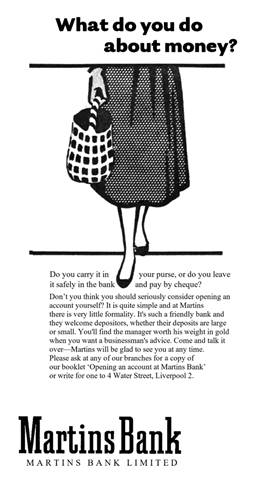
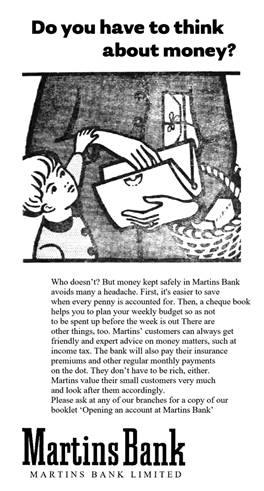
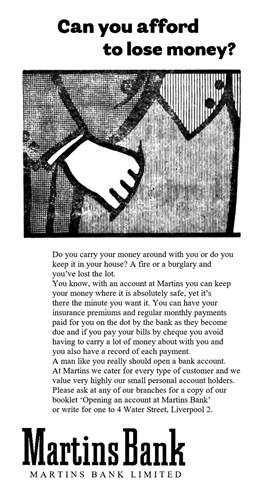
Now for just the tiniest amount of dumbing down:  Apologies for not grovelling at the end of correspondence, and the promise of a warm welcome from a manager who takes an interest in what  you get up to when you’re not doing your banking! The rather staid advertising of the 1940s and 1950s is all about appealing to customers’ trust – there is no better, safer or wiser bank.  It would seem that all businessmen both seek and give wise counsel.


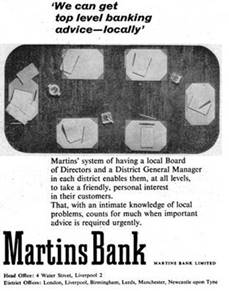
Your money is safe, you are safe.  Occupations, stately homes, even that most solid and dependable of games, golf - all are used to show stability, care and trust.  The advice you seek is available LOCALLY, thanks to Martins’ hierarchy of branches and local district head offices with their own board of directors and district manager.


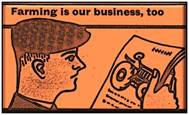
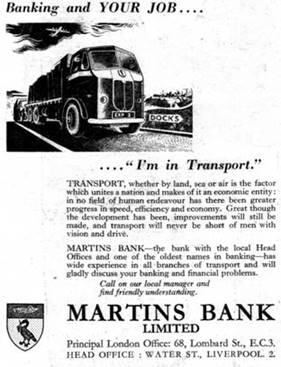
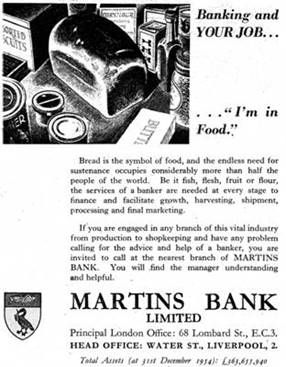
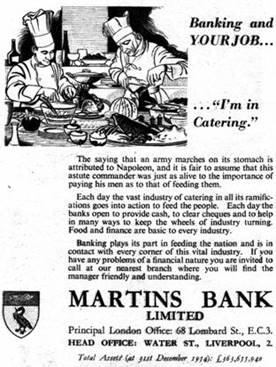
The commissioning of fine art by Martins will continue into the 1960s, but instead of drawings tenuously linked to traditional advertising, the artworks will be woven, crafted, even sculpted to provide each new branch with an artistic link to the area into which the Bank has expanded… (See also DESIGNING MARTINS). One of the last themed campaigns of the 1950s is the “Banking and your job” series.  The goal is to show that whatever you do for a job, banking is linked to that trade or profession, and works with you to keep the economy going…

Sep 1.jpg

1958 Top Level Banking Advice locally PA.jpg

1955 Banking and Your Job - I'm in Catering ad from Punch MBA.jpg

Sep 1.jpg

1955 Banking and Your Job - I'm in Transport MBA

1955 Banking and Your Job - I'm in Food MBA.jpg

Sep 1.jpg

1958 – mind your language(s)

Sep 1.jpg

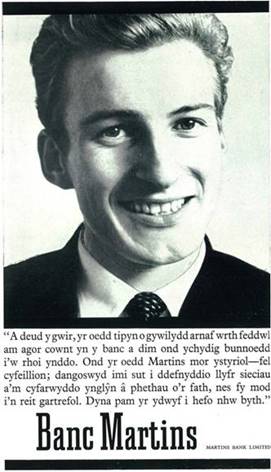
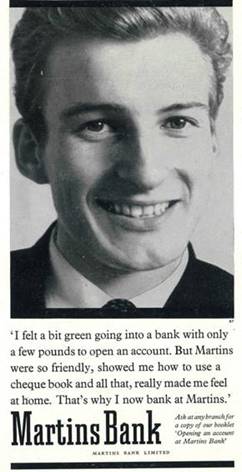
The 1958 campaign for the Royal National Eisteddfod includes customer recruitment advertisements that appeal directly to English AND Welsh speakers,and uses identical adverts to get the point across:

Sep 1.jpg

1958 Welsh customer ad BGA Ref  (25-251).jpg

1958 Customer ad  BGA Ref (25-251).jpg

Sep 1.jpg

We are about to move on to the most important decade for Martins Bank’s advertising – in fact the most important decade for the Bank as a whole – the 1960s. The 1950s sees the official birth of the Teenager and sparked by the “You’ve never had it so good” generation with their newly acquired pockets full of disposable income, Banks will increasingly compete for what will turn out to be an enormous consumer market. The soft and gentle approach to advertising, aiming elite comments at a privileged few becomes as much of an expensive luxury as it is a dinosaur.  Now is the time to grab the interest of the ordinary working public, and the way Martins chooses to do this will be hugely successful. Yet it owes its origins to the Bank’s earlier advertising: Potential customers from ALL income groups are shown images of people who look, work feel and act like THEY do, and the swinging sixties makes it all seem even more magical…

Sep 1.jpg

CHOOSE ANOTHER DECADE

Sep 1.jpg

© gut informiert! 2007 to date