|
  Here we look at the introduction in the 1960s by a number
of banks, of a card to guarantee cheques. By 1966 another banking revolution
is already under way, with the production of the now ubiquitous plastic
credit cards. (We must of course openly admit the limitations of Martins’
cardboard cheque guarantee card). The Archives also reveal an unusual break
with banking tradition, when Barclaycard is advertised on TV without breaking
the “gentleman’s agreement” that individual banks should not use this medium to sell their products. Barclaycard’s main rival for many years to
come will be the ACCESS Card, and with BOTH
products pitched fiercely against each other, there is a never ending round
of ever more expensive TV adverts. You can
read much more about the birth and life of the ACCESS card
by visiting our partner site Access Credit Card Info – simply click on the image above (right). Here we look at the introduction in the 1960s by a number
of banks, of a card to guarantee cheques. By 1966 another banking revolution
is already under way, with the production of the now ubiquitous plastic
credit cards. (We must of course openly admit the limitations of Martins’
cardboard cheque guarantee card). The Archives also reveal an unusual break
with banking tradition, when Barclaycard is advertised on TV without breaking
the “gentleman’s agreement” that individual banks should not use this medium to sell their products. Barclaycard’s main rival for many years to
come will be the ACCESS Card, and with BOTH
products pitched fiercely against each other, there is a never ending round
of ever more expensive TV adverts. You can
read much more about the birth and life of the ACCESS card
by visiting our partner site Access Credit Card Info – simply click on the image above (right).
|
|
Cardboard or Plastic?
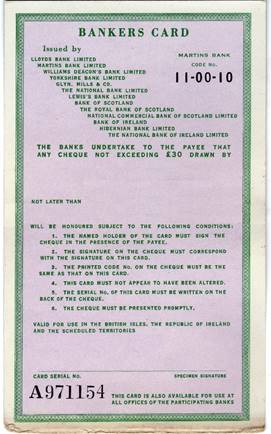
In the mid to late 1960s, the current account
becomes at last portable with the issue to customers of Martins Bank
Bankers Card. Remember, the number
of CASH
MACHINES in the UK is only just into double figures, so
if the holder of cheque card finds themselves in a town without a branch of
Martins, they are at least able to cash a cheque up to the value of £30
(quite a useful sum at that time), at any of the participating banks:

|
|
BANKERS
CARD
ISSUED
BY:
·
Lloyds Bank Ltd
·
Martins Bank Limited
·
Williams Deacon’s Bank Ltd
·
Yorkshire Bank Ltd
·
Glyn Mills and Company
·
The National Bank Ltd
·
Lewis’s Bank Ltd
·
Bank of Scotland
·
Royal Bank of Scotland
·
National Commercial Bank of Scotland Ltd
·
Bank of Ireland
·
Hibernian Bank Ltd
·
The National Bank of Ireland Ltd
|

|
It looks like something you have cut out
carefully from the back of a breakfast cereal packet, but this quaint yet
perfectly functional cheque guarantee card is actually in use well into the
early 1970s when it is replaced by the more familiar (clinical) plastic
variety. As things have turned out,
possibly every plastic card ever made is still somewhere in the
environment, whilst the cardboard ones have proved much more
environmentally friendly!
|
|
Thinking about it logically, why did no-one
think of making a plastic cheque card, at a time when plastic credit and charge cards were already in use in the UK?
 For Barclays, the smart move actually IS
into plastic – a small piece of kit which will outlast any cardboard
counterpart, and more importantly come to revolutionise the way we spend
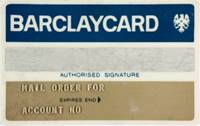
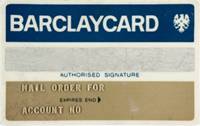
(or, more accurately BORROW) our money for decades to come. The BARCLAYCARD is invented, and the idea of a credit card that
can also be used to guarantee cheques is born. Another crucial step is to ADVERTISE the new concept of Barclaycard on TV – but how? For Barclays, the smart move actually IS
into plastic – a small piece of kit which will outlast any cardboard
counterpart, and more importantly come to revolutionise the way we spend
(or, more accurately BORROW) our money for decades to come. The BARCLAYCARD is invented, and the idea of a credit card that
can also be used to guarantee cheques is born. Another crucial step is to ADVERTISE the new concept of Barclaycard on TV – but how?
A gentleman’s agreement amongst all eleven
English Clearing Banks means that NO bank will Advertise alone on TV. As we find out now from John Dalton,
Former Barclaycard Advertising Manager, the dithering over being the first
bank to advertise on TV went on into the 1970s, with Barclays believing
they had succeeded in 1972. Then in 1989, a somewhat embarrassing discovery
is made….
|
|
|

A
Gentleman’s Agreement?
 To say that “Barclaycard ‘A piece of Plastic’” was a TV commercial
isn’t strictly true and it obscures a
fascinating aspect of early bank television advertising history. That film
was used only in cinemas and at promotional events. Until the 1970s, all the English banks honoured an
agreement that none of them would advertise
on television; the only bank advertising being screened in those days was the
famous “Bank Manager in the
Cupboard” screened by the Committee of London Clearing Banks. In 1972 Barclays believed that another bank might break
the agreement. For a competitor to be able to say that they were first on
television was a prospect (that Barclays general managers couldn’t possibly
contemplate – (neither did they want to be the Villains’ who broke the
agreement). Barclaycard was the perfect
solution; we were given a hefty supplementary budget of £93,000 just to get on the air first. Les
Priestley and I supervised the production of two commercials during our lunch
break one day. They were made at ITN’s West End studios and the whole job was
done in less than 20 minutes; in later years I would go overseas with Alan
Whicker for a whole two weeks, spend three times as
much on production and come back with three
commercials! Serious planned television
advertising from Barclaycard didn’t begin until 1978 when we made jewellers Shop with Dudley Moore.
Having said all that, it was not until 1989 that we
discovered that the very first Barclaycard television commercial wasn’t by
Barclays at all. It was made in about 1967 by the British Linen Bank (who at
that time offered Barclaycard to their Scottish customers) and was shown only
North of the Border. To say that “Barclaycard ‘A piece of Plastic’” was a TV commercial
isn’t strictly true and it obscures a
fascinating aspect of early bank television advertising history. That film
was used only in cinemas and at promotional events. Until the 1970s, all the English banks honoured an
agreement that none of them would advertise
on television; the only bank advertising being screened in those days was the
famous “Bank Manager in the
Cupboard” screened by the Committee of London Clearing Banks. In 1972 Barclays believed that another bank might break
the agreement. For a competitor to be able to say that they were first on
television was a prospect (that Barclays general managers couldn’t possibly
contemplate – (neither did they want to be the Villains’ who broke the
agreement). Barclaycard was the perfect
solution; we were given a hefty supplementary budget of £93,000 just to get on the air first. Les
Priestley and I supervised the production of two commercials during our lunch
break one day. They were made at ITN’s West End studios and the whole job was
done in less than 20 minutes; in later years I would go overseas with Alan
Whicker for a whole two weeks, spend three times as
much on production and come back with three
commercials! Serious planned television
advertising from Barclaycard didn’t begin until 1978 when we made jewellers Shop with Dudley Moore.
Having said all that, it was not until 1989 that we
discovered that the very first Barclaycard television commercial wasn’t by
Barclays at all. It was made in about 1967 by the British Linen Bank (who at
that time offered Barclaycard to their Scottish customers) and was shown only
North of the Border.
John’s
comments were orignially written in a letter to Barclays Connection Magazine
in 2000 and are reproduced here by kind permission of Barclays Connection
Magazine.
Advertisement and Barclaycard Name and Logo ©
Barclays and all other rights holders 1966 to date.

Martins Bank is first
on TV in England!
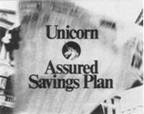
The story above solves another
minor mystery in Martins Bank’s history – their 1968 TV advertisement for
Martins Unicorn is shown by three ITV companies – Granada, Yorkshire and
Southern. These areas have the largest
concentrations of Martins Bank Branches and customers. By perhaps taking
notice of the British Linen Bank’s lead for advertising in Scotland the
product of a Barclays SUBSIDIARY company,
Martins too is able to circumvent the special agreement, and in the process
it becomes the first bank to advertise on TV in England, AND without looking
like the villain of the piece! Our
search for a copy of the Martins ad continues, but you can see stills from
it, and read more about how it was made, by clicking HERE.
The long and winding
road to credit scoring…
|
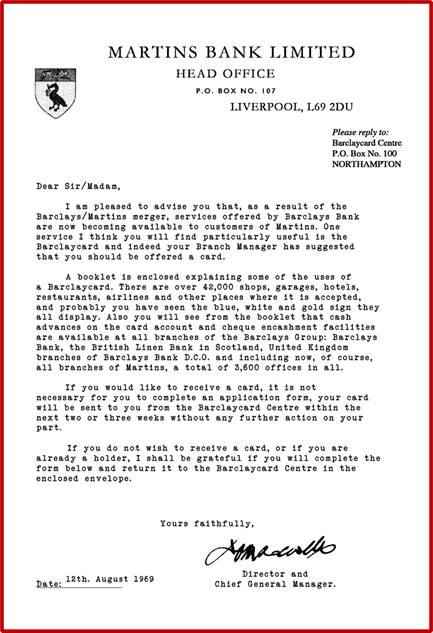
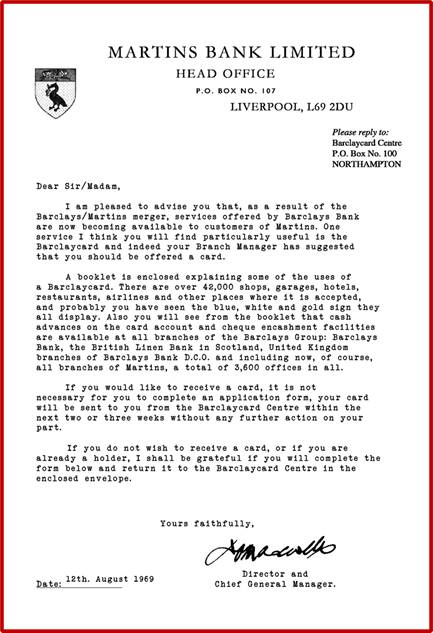
As preparations for the merger of Martins Bank and Barclays Bank gain
pace, Barclays spots an early opportunity to offer its still new Credit
Card facility to the customers of Martins Bank. Not EVERY customer of course, mostly
just those with a particularly high “net worth”. This fairly innocent looking letter turns
up on the doormats of the fairly well to do, inviting them on an opt-OUT
only basis to enjoy the use of their very own BARCLAYCARD.

 It is
interesting to note, that since its arrival in 1966, the Barclaycard was
capable by 1969 of offering credit via 42,000 outlets – nothing close to
the many millions that are today shared amongst thousands of card issuers
around the World, but nevertheless hugely impressive for the time. In the late 1960s, religion and a very
“British” state of mind meant that many would shy away from the thought of
using credit, “never a borrower, nor a lender be” uppermost in their minds. It is
interesting to note, that since its arrival in 1966, the Barclaycard was
capable by 1969 of offering credit via 42,000 outlets – nothing close to
the many millions that are today shared amongst thousands of card issuers
around the World, but nevertheless hugely impressive for the time. In the late 1960s, religion and a very
“British” state of mind meant that many would shy away from the thought of
using credit, “never a borrower, nor a lender be” uppermost in their minds.
However,
the credit bug became irresistible, and, helped by a clarification of
customer rights in the 1974 Consumer Credit Act, we’ve been borrowing on
the “never-never” ever since. It is
however a somewhat sad and sobering thought that in the 2020s we are
encouraged to build a CREDIT rating,
rather than to save for the things we need.
The
invention by Barclays of the DEBIT card in the early 1980s was greeted with suspicion by many, who
could not separate out in their minds the difference between a plastic
cheque and a credit card. Now, debit cards are indispensable, and along
with being able to pay by mobile phone, watches and other devices, the days
of cash itself are numbered, along with those of most Bank Branches. Credit
alone is no longer enough – you must also stay permanently wired into your
own “credit score”, otherwise, it would seem, you are not a very good
person at all…
|
|
Intellectual
Property Rights © Martins Bank Archive Collections 1988 to date.
R
|


