|
|


<

|
NEW TECHNOLOGY – LONDON COMPUTER CENTRE |
|
|
||||||||||||||||||||||||||||||||||||||||||||||||||||||||||||||||||||||||||||||||||||||||||||||||
|
|
WHY NOT ALSO VISIT THESE PAGES |
|||||||||||||||||||||||||||||||||||||||||||||||||||||||||||||||||||||||||||||||||||||||||||||||
|
|
|
|||||||||||||||||||||||||||||||||||||||||||||||||||||||||||||||||||||||||||||||||||||||||||||||
|
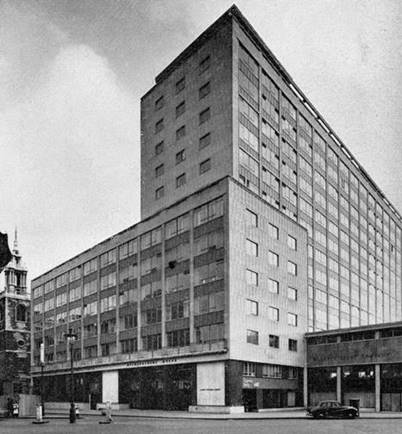
Image - Martins Bank
Archive Collections © Architect & Building News 1959
|
At the same time, work is under way at London Automation Department in
the basement of Clements House, Gresham Street, to write the programs that
will be used by the computers at Bucklersbury House, and to automate most of
Martins’ London Branches to the stage where their daily work will all be
handled by computer.
This is a fascinating time in the Bank’s history, for, as WE know, Martins Bank itself will not be around for much
longer. Perhaps the most surprising
legacy of this work is the continual use of parts of the original Martins
Branch Accounting program by Barclays in the twenty-first century! – Martins
writes into the program a feature that refers accounts in danger of exceeding
their overdraft limits to managers at the start of each working day, a clever
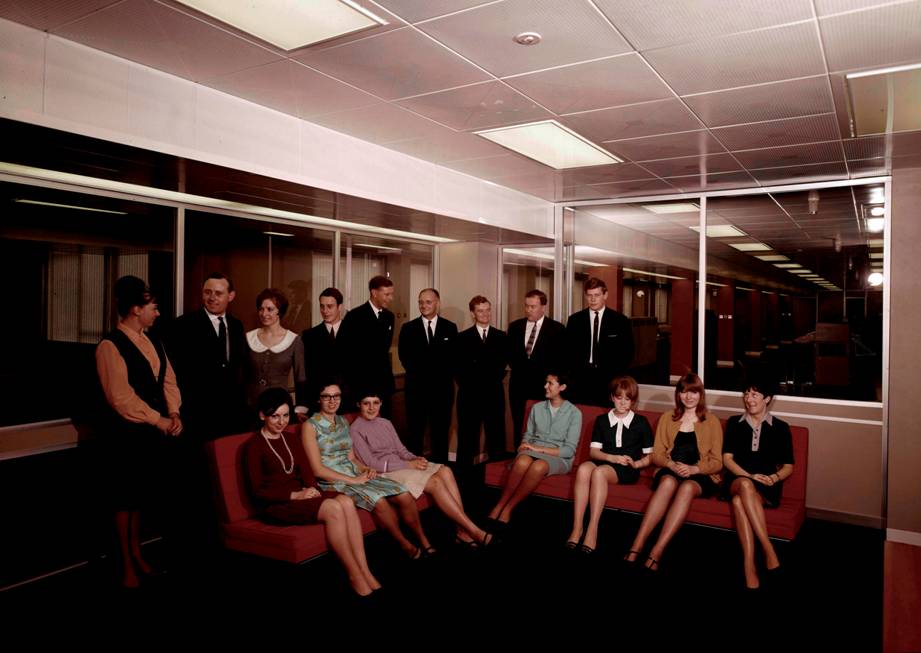
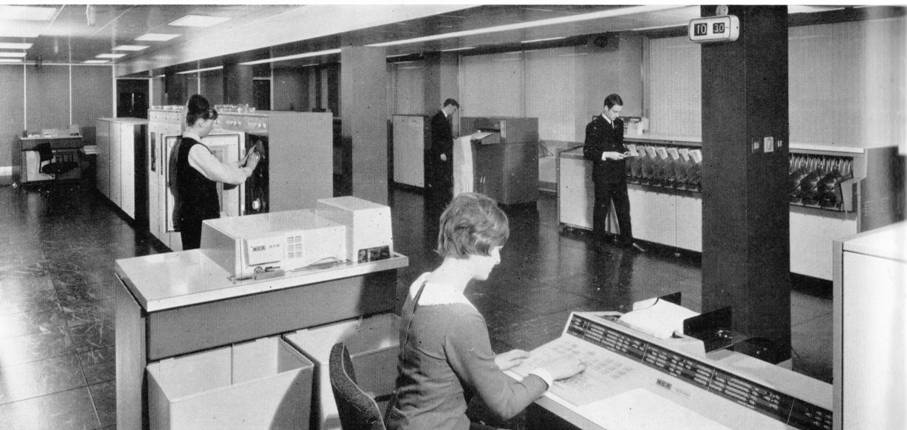
routine that will help the control of accounts for decades to come. The staff group image below, looking like a
scene from the TV series “Mad Men” was originally exposed and developed on a
large glass plate. It was scanned for
Martins Bank Archive and Barclays Group Archives in July 2012 and then
restored by Martins Bank Archive. The
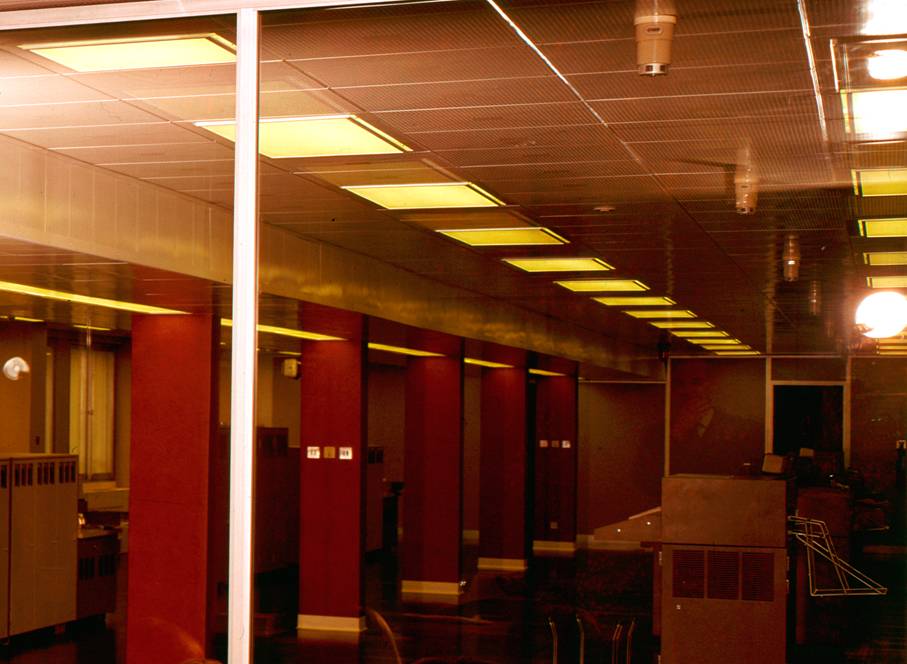
photo is so detailed, it was possible to extract from it a view into the
print room, seen through the windows behind the staff seated on the right,
and this is shown in the article further down this page. |
|||||||||||||||||||||||||||||||||||||||||||||||||||||||||||||||||||||||||||||||||||||||||||||||
|
Image © Martins Bank Archive
Collections
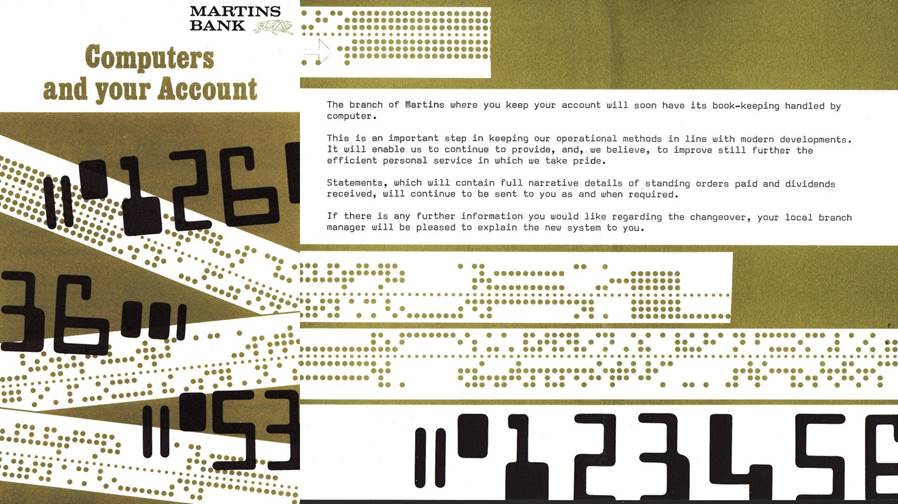
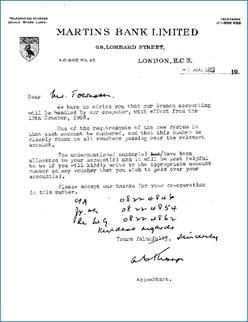
This leaflet is made available to customers in 1968. It seems fairly
innocuous, and rightly so, as the British public has a certain mis-trust of
computers born form not really knowing or understanding much about them. With
the benefit of hindsight, we can of course see that even these few words
carry within them the turmoil of the next fifty years – first of all MORE
staff are required to operate computers, and then, ever so gradually, the
development and capabilities of next generation computers leads us to today’s
world where bank branches are now almost a thing of the past. However, it all
began innocently enough, with the idea that these new “workhorses” would free
up the time of staff, so that they could spend more of it with the customer.
The idea of your account being known by a number, rather than by your name,
was actually shocking to many, and each customer was written to personally,
asking for their co-operation with the mammoth task of numbering every
account. Letters like this one (left) were issued towards the end of 1968
informing customers of their account number(s) and asking them to write
it/them on their cheques and paying in slips! This will undoubtedly have
upset some of those customers who enjoyed the intimacy of service hitherto
offered by Martins Bank, yet this was really a fait accompli, as ALL banks
went through similar exercises to be ready for the computerised 1970s and
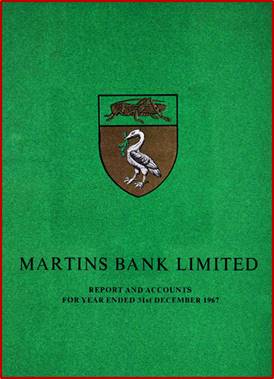
beyond. With all this in mind, lets go back to the beginning, and the proud
optimism with which the computer age is heralded by Martins in its annual
report and accounts for 1967.. |
||||||||||||||||||||||||||||||||||||||||||||||||||||||||||||||||||||||||||||||||||||||||||||||||
|
Computer Integration
and Improved Services … |
||||||||||||||||||||||||||||||||||||||||||||||||||||||||||||||||||||||||||||||||||||||||||||||||
|
{Our new Computer
Centre at Bucklersbury House in the City of London has now been fully
equipped and, in addition to handling cheques received from the Central
Clearing House, has started to process the accountancy work of the central
London branches; plans for offering new customer services are well advanced.
We are also studying closely the system by which all our branches will be
brought on to computer operation. This is a complex matter in that the
arrangements we make must enable us to retain our fully competitive position
and yet be capable of integration with automated systems being developed by
the banking industry and its customers throughout the country}.
{The Post Office Giro
will commence operations in the Autumn of 1968 and we have given careful consideration
to the manner in which its operation could affect our existing and future
business. We have co-operated fully with other banks in the production of the
recently published book- let on Bank Money Transfer Services and in the
establishment of the proposed Inter-Bank Computer Bureau for the exchange of
magnetic tapes between banks, and between hanks and their customers. The
Bureau will facilitate the transmission of funds, it being intended that all
modem automation techniques should be employed to ensure that the needs of
the community relative to the transfer of money are efficiently satisfied by
the clearing bank systems. We believe that the bank giro credit transfer and
the direct debiting systems, both of which are explained in the booklet, are
fully competitive with those to be offered by the National Giro, and we are
confident of our ability to give a better banking service.
The Bankers Card which was introduced in 1966 has
proved increasingly popular with customers as have our new 24-hour cash
dispensing machines, most of which are to be provided in 1968; meanwhile we
are constantly seeking new methods of improving still further our normal
counter service}. (Extract
from Martins Bank’s Annual Report and Accounts 31 December 1967) |
||||||||||||||||||||||||||||||||||||||||||||||||||||||||||||||||||||||||||||||||||||||||||||||||
|
Image © Barclays Ref 0033-0847 Restored by Martins Bank
Archive
The Computer Centre reflects the culmination
of a long period of investigation and planning. The first problem was to find
premises of sufficient size and adequate design to house not only the
computers but the complicated ancillary equipment such as air conditioning,
motor alternators, stand-by power generator and electrical installations. The
premises had to be close to the Clearing House in view of the daily cheque
clearings in the City of London.Bucklersbury House proved ideal, both in
location and size, for the allied working of the clearings and the computer
system and in the spring of 1966 orders were placed with the National Cash
Register Company Limited for computer equipment comprising three cheque
reader/sorters, two Model 315 computers which could each be used to control
sorters and act as satellite printers, and an extremely fast-working Model
315 R.M.C. (rod memory core) computer. Delivery dates for computer equipment
of this nature are usually protracted but N.C.R. co-operated
enthusiastically, promising delivery of our cheque reader/sorters and two
Model 315 computers in October 1966, and the third computer in about March
1967.
Each computer has a 40,000 character
memory, with a paper tape-reader and paper tape-punch. The cheque
sorter/readers each have eighteen pockets, one machine being controlled by
each computer with the third machine available for use 'off line' or to be switched
into either computer should a sorter break down. Each computer has a cluster
of three magnetic tape decks and by means of an inter-switching device all
six handlers can be placed under the control of either computer at will.
Finally there are three high-speed printers; one computer can control two at
once and the middle unit can be switched to either computer as required
through the same inter-switching device.
|
||||||||||||||||||||||||||||||||||||||||||||||||||||||||||||||||||||||||||||||||||||||||||||||||
|
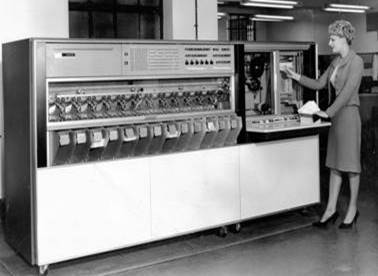
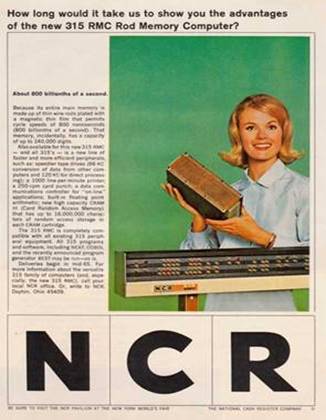
The 315 R.M.C. computer will be twice as large as the other two and approximately
twenty times as fast: where the 315's have a cycle time of two millionths of
a second, the R.M.C. model has
a cycle time of 800 nanoseconds (a nanosecond equals 10~9 seconds
or an American billionth). A communications controller for future use in
teleprocessing is incorporated in the machine which will have a paper tape
reader/punch, a high speed printer, eight tape handlers and a Mark 3 CRAM, a
random access device which will be used for holding the programme. The initial projects for the Centre
will consist of an automated General Clearing, and also accounting for the
Bank's travellers' cheques, and branch accounting for the London branches.
Further projects will include data transmission to extend branch accounting
to provincial centres, and taking certain specialised departments onto
computer application. The clearing project, beginning in
January, is almost certain to provide the first impact on branches, the
notable change being that automated clearings will have been balanced before dispatch by the Clearing
Department, arriving at branches complete with a listing and total. During March the automated procedure
for travellers' cheques will be introduced and it is hoped that later in
1967 it will be possible to apply the first London branch to computer
operation. Once this system has been proved the loading onto computer
operation of further London branches will follow. As the work increases the
staff of the Centre will move into a cycle of two-shift and ultimately
three-shift 'round the clock' working. |
The
NCR 315 Rod Memory Computer Image: www.unplggd.com |
|||||||||||||||||||||||||||||||||||||||||||||||||||||||||||||||||||||||||||||||||||||||||||||||
|
Wiped
from memory… |
||||||||||||||||||||||||||||||||||||||||||||||||||||||||||||||||||||||||||||||||||||||||||||||||
|
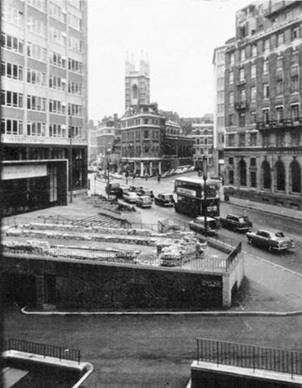
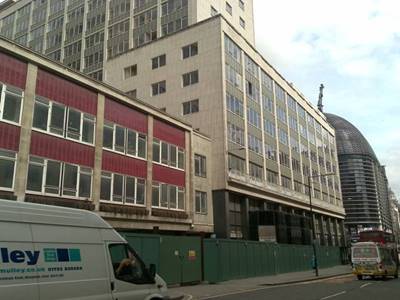
It came as a huge disappointment to us, to learn of the demolition of
Bucklersbury House, home of Martins London Computer Centre, and where the
UK’s first Bank Branch Accounting computer program, written at Automation
Department in nearby Clements House, was used to record everyday banking
transactions. Our modern day Banking systems owe much to these pioneers. It is even more of an irony that Clements
House is located in Gresham Street – Sir Thomas Gresham having traded in 1563
at the Sign of the Grasshopper. Exactly four hundred years later, whilst
marking the Bank’s Anniversary, Martins’ Chairman Sir John Nicholson
announced Martins Bank’s COMPUTER FIRST to the World… The original records of the purchase of
Bucklersbury House, and the fixtures and fittings ordered by the Bank have
been provided to us by our friends at Barclays. We will add a summary of these quite considerable
costs, to this feature in due course. |
Image © Martins Bank Archive
Collections - Mark Hilary |
|||||||||||||||||||||||||||||||||||||||||||||||||||||||||||||||||||||||||||||||||||||||||||||||
|
|
||||||||||||||||||||||||||||||||||||||||||||||||||||||||||||||||||||||||||||||||||||||||||||||||
|
|
||||||||||||||||||||||||||||||||||||||||||||||||||||||||||||||||||||||||||||||||||||||||||||||||